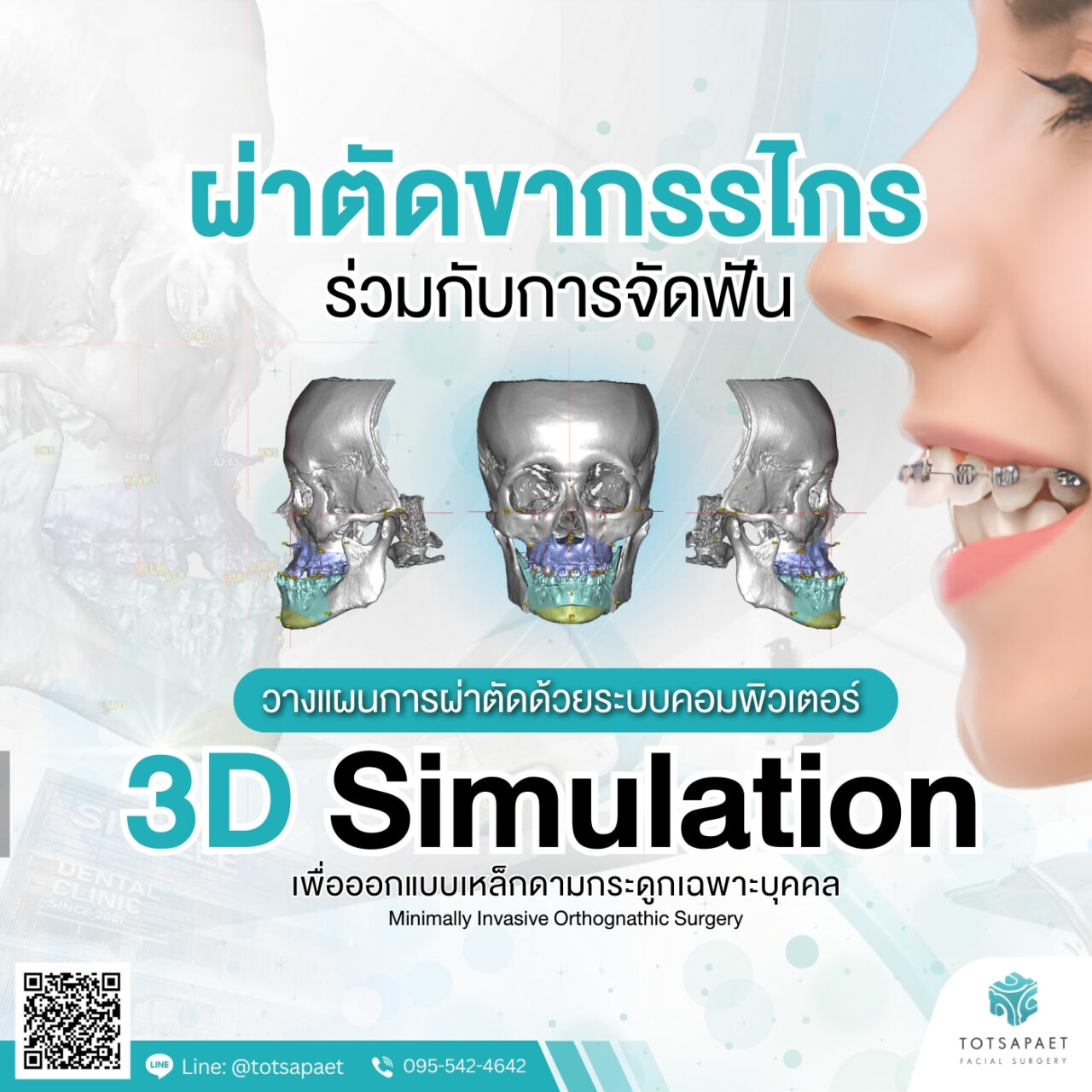

Facial and Jaw Corrective Surgery (Oral and Maxillofacial Surgery)
Facial asymmetry is not only an aesthetic concern but is also closely related to the function of the masticatory system and temporomandibular joints. Accurate diagnosis by a team of dental specialists allows for appropriate treatment planning, whether through orthodontic treatment alone or in combination with surgery, to achieve long-term results that are both aesthetically pleasing and functionally effective.
Facial and jaw corrective surgery is performed to reposition the jawbones into a more appropriate anatomical position or to reshape the facial skeleton to achieve better facial symmetry. This procedure may be performed with or without orthodontic treatment depending on the diagnosis and the underlying condition.
If the problem is not related to bite alignment, orthodontic treatment may not be necessary. Examples of such procedures include cheekbone reduction surgery, chin contouring, or mandibular angle reduction.
However, if the problem is related to bite alignment (occlusion), orthodontic treatment is required in combination with jaw surgery. This type of treatment is known as Orthognathic Surgery.
Orthognathic Surgery Combined with Orthodontic Treatment
Orthognathic surgery is a treatment used to correct abnormalities of the jawbones and facial structure in combination with orthodontic treatment to align the teeth properly.
These abnormalities may be congenital or may develop later during the patient’s growth and development. Treatment involves both orthodontic treatment and surgical repositioning of the jawbones to address conditions such as:
- Facial asymmetry
- Lip protrusion
- Excessive gum display when smiling (gummy smile)
- Lower teeth positioned in front of the upper teeth (underbite or mandibular prognathism)
- Functional problems with chewing caused by malocclusion
These conditions often result from uneven growth of the upper and lower jawbones. As a result, patients may experience difficulty chewing food, speaking clearly, or may develop symptoms such as snoring or obstructive sleep apnea (OSA). In addition, abnormal jaw alignment may lead to temporomandibular joint disorders (TMJ disorders), causing pain in the jaw joints.
In cases where facial bones have been fractured due to trauma or accidents, surgical correction may also be required. In such situations, orthodontic treatment alone cannot correct the underlying skeletal problem, and surgical repositioning of the jawbones is necessary.
Treatment Approaches for Orthognathic Surgery
Orthognathic treatment can generally be performed using two main approaches:
- Orthodontic Treatment Before Surgery (Conventional Approach)
Traditionally, treatment begins with orthodontic treatment to align the teeth and correct dental positioning before surgery. The duration of orthodontic treatment varies depending on the complexity of each case but typically takes approximately 2–3 years.
During this pre-surgical orthodontic phase, some patients may notice temporary changes in facial appearance. For example, the upper or lower teeth may appear more protrusive or the facial profile may appear less balanced. This occurs because the teeth must be properly positioned and angled before surgery to ensure the best surgical outcome.
Once the teeth are prepared, the patient will undergo surgery to correct the abnormal position of the upper jaw, lower jaw, or both. After surgery, orthodontic treatment continues for an additional 1–2 years to refine the bite and stabilize tooth alignment.
The total treatment time using this approach is typically around 3–5 years.
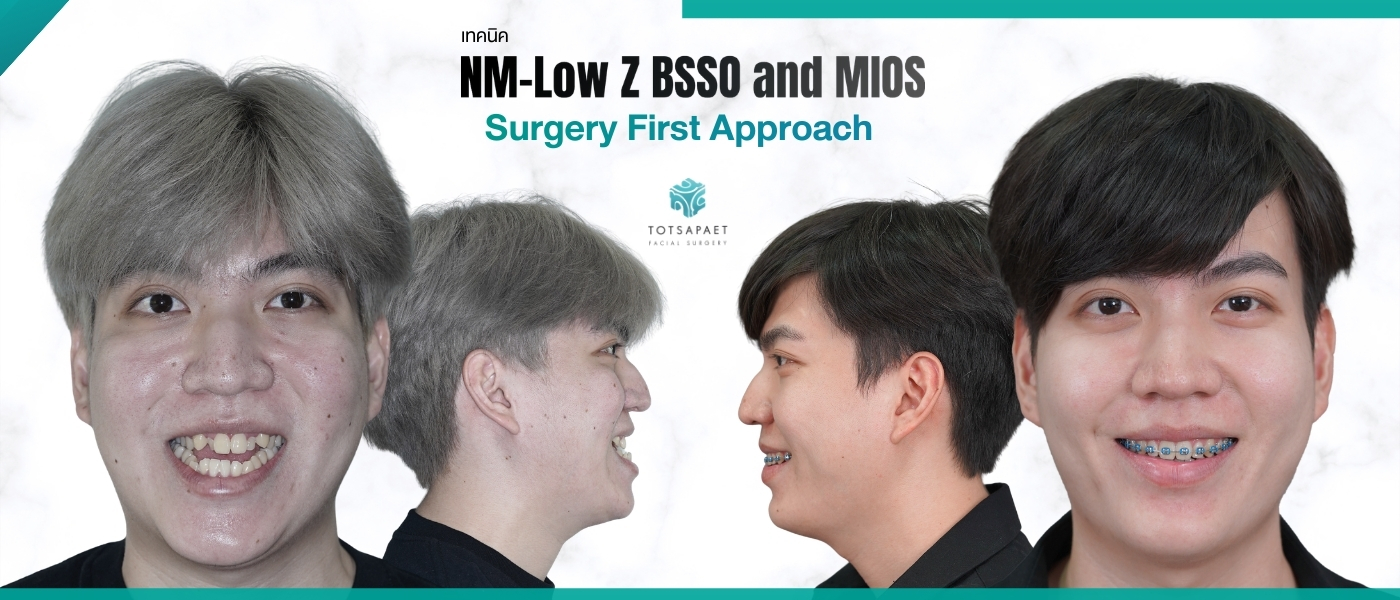
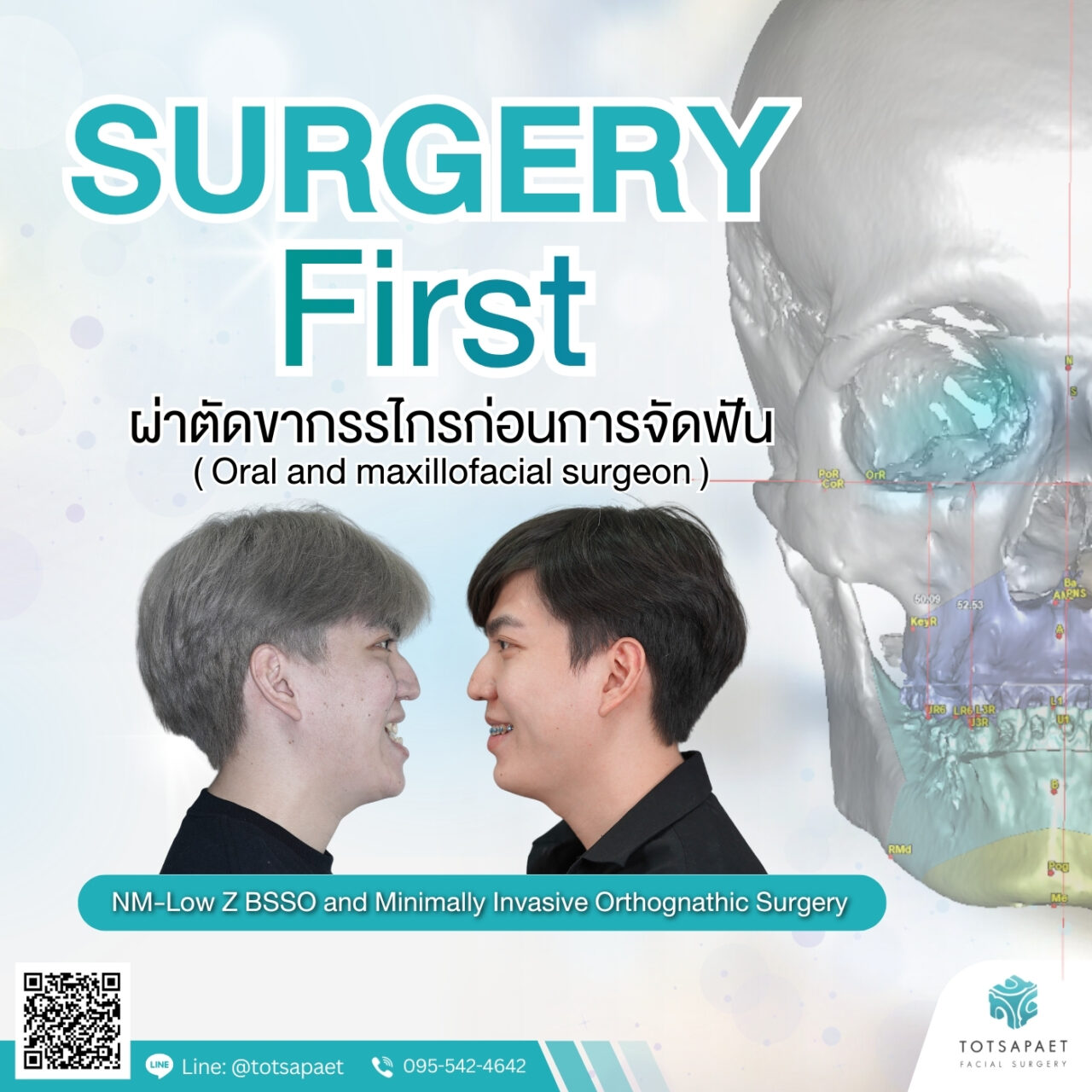
- Surgery First Approach (Surgery Before Orthodontics)
In recent years, the “Surgery First” approach has become increasingly popular. In this method, jaw surgery is performed first to correct the skeletal abnormality, followed by orthodontic treatment to adjust the alignment of the teeth afterward.
One advantage of this approach is that the total orthodontic treatment time is often shorter. Surgical procedures are believed to stimulate faster tooth movement, allowing orthodontic treatment to be completed in approximately 6 months to 2 years, depending on the complexity of the case.
Another significant benefit is that patients can experience immediate improvement in facial appearance after surgery, even before orthodontic treatment is completed.
Regardless of the treatment approach, proper diagnosis and treatment planning by specialized clinicians are essential. Orthognathic treatment should always be carefully planned by a multidisciplinary team consisting of an oral and maxillofacial surgeon and an orthodontist.
Jaw surgery is typically performed after skeletal growth has been completed—generally around 14–16 years of age for females and 18–21 years for males—to prevent further changes in facial structure after surgery.
If you experience facial asymmetry or have difficulty chewing, speaking, or breathing, it is recommended that you consult with an oral and maxillofacial surgeon for a comprehensive evaluation and treatment